Restoring Dignity, One Life at a Time: Inside a Mercy Said No Medical Mission
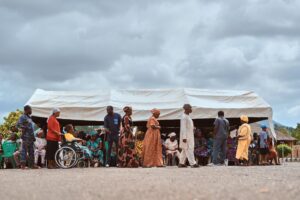
Every year, a diverse team of volunteers from across the world gathers under one purpose, to serve. Through Mercy Said No, medical professionals, support teams, and individuals from different walks of life come together on a mission to Nigeria, offering free medical services to communities where access to healthcare is not always guaranteed.
But beyond the numbers, beyond the structure of clinics and consultations, there is something deeper happening. These missions are not just about treatment, they are about dignity. They are about restoring something that many have quietly lived without for far too long.
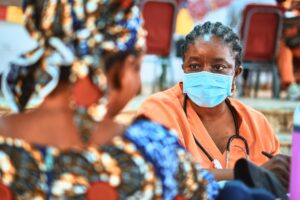
For the elderly, the experience often carries a weight that is difficult to fully describe. Many arrive having endured years of untreated conditions, aches that have become part of daily life, illnesses that have gone unchecked, not because they chose to ignore them, but because access was never within reach. When they finally sit across from a healthcare professional, there is more than a diagnosis taking place. There is acknowledgment. There is care. There is the simple but powerful act of being seen.
You notice it in the way they listen closely, in the questions they ask, in the quiet relief that follows understanding. You see it when they receive medication, not just as treatment, but as a sign that their well-being matters. In those moments, dignity is restored, not loudly, but deeply.
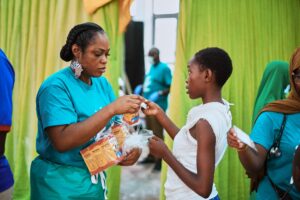
For children, the mission becomes something else entirely. It is often their first encounter with structured medical care, and with it comes both curiosity and comfort. Some arrive hesitant, unsure of what to expect. Others hold tightly to their parents, seeking reassurance. But as the process unfolds, fear begins to ease. Smiles return. Laughter breaks through.
Early diagnosis and treatment mean more than immediate relief, they shape futures. A condition addressed in time can change the course of a child’s life, allowing them to grow, learn, and thrive without the burden of untreated illness. And in those small, joyful moments, when a child leaves smiling, when a parent exhales in relief, you understand the depth of what has just taken place.
Families, too, carry their own stories into the mission. Many come not just for themselves, but for one another. A mother seeking care for her child. A son accompanying his aging parent. A family navigating health challenges together with limited resources. In serving one individual, you often touch an entire household.
There is a quiet strength in these families, a resilience that continues despite challenges. And when care is finally accessible, even briefly, it creates a shift. Burdens feel lighter. Questions find answers. Hope, even if momentary, is restored.
What makes these missions truly powerful is not just the care provided, but the connection formed. Volunteers do not simply move from one patient to the next, they listen, they engage, they meet people where they are. And in doing so, something mutual is created. Service becomes a shared human experience, not a one-sided act.
There is also something profoundly personal about witnessing these moments. It changes you. It reshapes how you understand access, privilege, and responsibility. You begin to see healthcare not just as a system, but as a lifeline, one that, when extended, carries the power to restore not only health, but dignity and hope.
Year after year, these missions continue, not because the need disappears, but because the impact is undeniable. Lives are touched. Stories are changed. Communities are reminded that they have not been forgotten.
And perhaps that is what matters most.
Because in every elderly patient who walks away feeling seen, in every child who leaves with a brighter future, and in every family that finds relief, even if just for a moment, the mission fulfills something far greater than its immediate purpose.
It reminds us that care, when given with intention, has the power to restore dignity, strengthen communities, and quietly change lives in ways that last long after the mission ends.
In the end, the true measure of a mission is not only in the number of patients seen or treatments given, but in the dignity restored, the hope renewed, and the lives quietly changed. Through the work of Mercy Said No, each encounter becomes more than a moment of care, it becomes a reminder that every person matters, regardless of circumstance. And as these missions continue, so does their impact, reaching far beyond the days on the ground and living on in the people, families, and communities they touch.
Community-Centered Engagement
We begin by listening. Every mission is designed in collaboration with local leaders, health workers, and community members to ensure that our interventions respond to real needs.
Collaborative Partnerships for Greater Impact
We believe impact is stronger when it is shared. Mercy Said No works closely with partners such as Royal Wellness International, Ife Med Alumni, Spring Time Foundation, and Love Kitchen, among others.
These collaborations allow us to combine expertise, expand our reach, and deliver more comprehensive and effective healthcare services to underserved communities.
Volunteer-Driven Excellence
Our missions are powered by a diverse network of passionate professionals and volunteers, where skill meets compassion to deliver both quality care and human connection.